
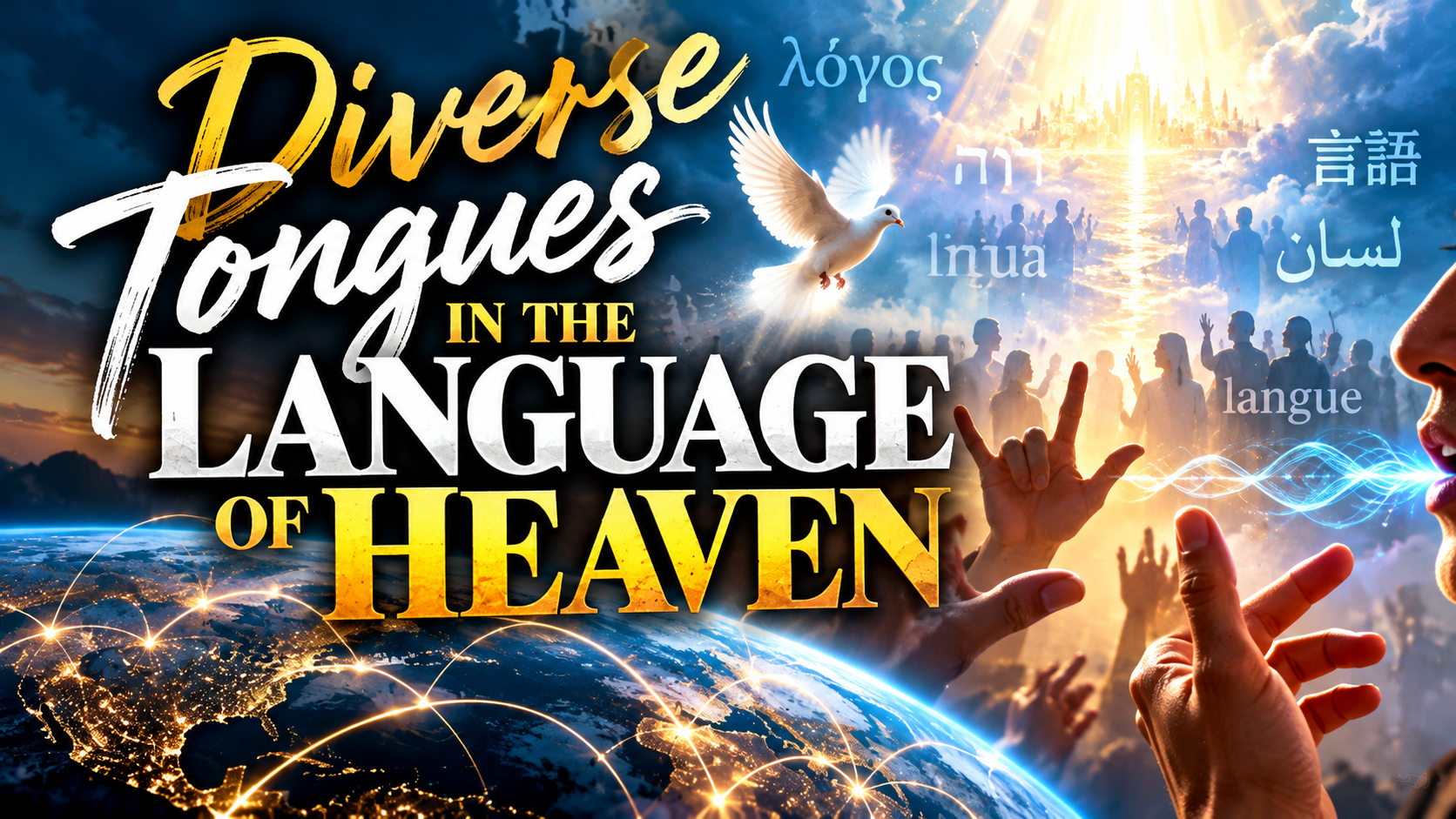
Years ago, I had a good friend whose son was deaf, and that motivated me to learn sign language. I took a class, learned the basics of American Sign Language (ASL), and diligently worked on hand spelling and building my vocabulary. Along the way, I became friends with two brothers who were both deaf, and suddenly what I had learned became more than something interesting. It became a way to communicate, build relationships, and even minister.
What fascinated me was how much we could communicate without knowing every sign. A gesture, an expression, a movement of the hands—we found ways of understanding each other.
Maybe part of that fascination came from growing up in New York City, where languages were everywhere. You could travel from Little Italy to Spanish Harlem and almost feel like you’d entered another country. I remember visiting a friend whose mother spoke mostly Italian. She’d speak a little English to me, then turn around and start talking to him in Italian—sometimes rather loudly! I didn’t understand every word, but I knew he understood perfectly.
Years later, ministry took me into other nations. Traveling through West Africa, I watched languages change as we crossed borders. French, Arabic, Spanish, and regional dialects surrounded us. My friend Leroy and I somehow became León and Tigre—the Lion and the Tiger—to the kids, and they embraced us. It was beautiful discovering that affection didn’t always require perfect vocabulary.
I’ve experienced the same thing ministering in Belarus, where interpreters became essential. I could preach what God had given me, but without someone interpreting, the people couldn’t understand my words.
And somewhere in all of that, I began seeing a spiritual picture.
God understands every language on earth, but He also gave His Church a language that didn’t originate on earth.
When the Holy Spirit was poured out at Pentecost, Acts 2:4 tells us, “They were all filled with the Holy Ghost, and began to speak with other tongues, as the Spirit gave them utterance.” People from throughout the known world were gathered in Jerusalem, and something supernatural happened. They asked, “How hear we every man in our own tongue, wherein we were born?” (Acts 2:8).
There’s something fascinating about that word hear. The Greek word is akouō, meaning to hear, and in context, to hear with understanding. Luke also uses dialektos, from which we get our English word dialect. These people weren’t merely hearing unusual sounds. They recognized their own languages and understood the wonderful works of God.
So where did the miracle happen? In the speaking? The hearing? Perhaps both? Scripture doesn’t explain every detail. But Acts tells us the Holy Spirit gave the utterance, while the people heard and understood.
The Holy Spirit overcame the barrier to understanding.
And that takes us all the way back to Babel.
In Genesis 11, mankind shared one language, but their unity wasn’t surrendered to God. They declared, “Let us make us a name” (Genesis 11:4). Their ambition centered upon themselves rather than God. The Lord confused their language, and they were scattered.
Then came Pentecost. God didn’t eliminate linguistic diversity. He did something greater. Through the Holy Spirit, He crossed the barrier that had once produced confusion.
At Babel, people spoke and couldn’t understand. At Pentecost, people spoke, and by the supernatural work of the Holy Spirit, others heard and understood.
Babel was humanity attempting to reach heaven through its own strength. Pentecost was heaven reaching humanity through the Holy Spirit.
And that brings me to speaking in tongues.
Over the years, I’ve noticed that people praying in the Spirit don’t necessarily sound alike. There can almost seem to be different dialects or patterns. Paul writes about “the tongues of men and of angels” (1 Corinthians 13:1), and Scripture identifies “divers kinds of tongues” and “the interpretation of tongues” among the manifestations of the Spirit (1 Corinthians 12:10).
God isn’t confused by that diversity.
Paul said, “For he that speaketh in an unknown tongue speaketh not unto men, but unto God: for no man understandeth him; howbeit in the spirit he speaketh mysteries” (1 Corinthians 14:2).
What sounds mysterious to my natural understanding isn’t mysterious to God. And when He chooses, the same Holy Spirit who gives the utterance can give the interpretation (1 Corinthians 14:13).
I remember Pastor Phil telling me about preaching when someone later explained that she’d stopped interpreting because she heard him speaking fluent Spanish. His response was basically, “I don’t speak Spanish!” Yet somehow God communicated what needed to be communicated.
The Holy Spirit is the great Communicator.
Maybe that’s one of Pentecost’s greatest lessons. God’s Kingdom isn’t limited by vocabulary, geography, or our ability to learn another language—which, believe me, isn’t exactly one of my greatest gifts.
Romans 8:26 reminds us that when we don’t know what to pray, the Spirit helps our weaknesses. Sometimes my English vocabulary runs out. My understanding runs out. I don’t even know how to formulate the prayer anymore.
But the Holy Spirit does.
I don’t have to understand everything I’m saying for God to understand everything I’m praying.
Revelation 7:9 gives us a beautiful picture of a multitude from every nation, kindred, people, and tongue standing before the Lamb. Notice that God didn’t erase their diversity. He redeemed it.
Heaven isn’t threatened by our differences. And whether our prayers rise from Manhattan, Mali, Belarus, or some little prayer room nobody has ever heard of, God understands the language of a heart surrendered to Him.
Prayer
Father, thank You that You aren’t limited by my language, understanding, or ability to find the right words. Thank You for the Holy Spirit, who knows what is in my heart even when I struggle to express it.
Holy Spirit, sharpen my spiritual hearing. Teach me not only to speak, but to listen with understanding. When You give utterance, help me yield. When You give interpretation, help me listen. And when You speak through someone whose language or culture is different from mine, help me recognize Your voice.
Lord, where confusion has entered, bring understanding. Where pride has built its own towers, tear them down. Remind us that we don’t have to reach heaven through our own ability because You have already reached humanity through Jesus Christ.
Give us ears to hear, hearts to understand, and lives surrendered to Your Spirit. May we always declare the wonderful works of God.
In Jesus’ mighty name, Amen.
Go with God, y’all.